
Thinking about replacing your furnace or installing a new heating system? For Harrisburg homeowners in colder climates, a reliable furnace is essential. When winter temperatures drop and snow starts piling up, your furnace becomes the heart of your home’s comfort, keeping you warm without relying on layers of blankets.
Before choosing a new system, it’s important to ask:
Is a new furnace within my budget?
Which type of furnace is best for my home and climate?
Furnace installation costs can vary widely depending on your home’s size, location, and the type of system you choose. On average, furnace unit costs range from $2,672 to $6,575, while a full furnace installation typically costs between $4,820 and $9,350 nationwide.
These totals usually include:
The furnace unit
Labor and installation fees
Removal and disposal of the old furnace
Ductwork modifications (if needed)
Permits and system upgrades
Let’s break down furnace types, costs, and what factors influence pricing so you can make an informed decision for your Harrisburg, PA home.
While natural gas furnaces are the most popular, oil and electric furnaces are also common options, depending on location and fuel availability.
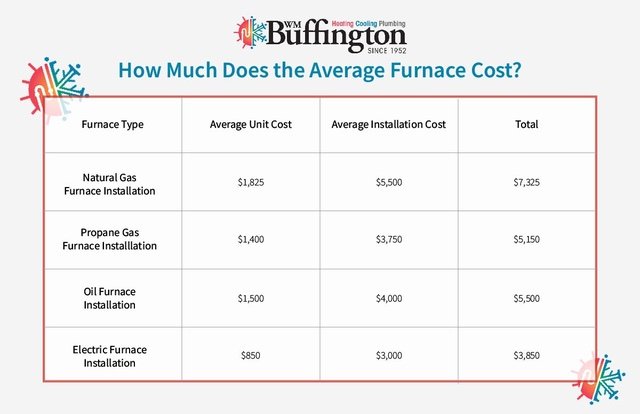
| Furnace Type | Average Unit Cost | Average Installation Cost |
| Natural Gas Furnace Installation | $1,825 | $5,500 |
| Propane Gas Furnace Installation | $1,400 | $3,750 |
| Oil Furnace Installation | $1,500 | $4,000 |
| Electric Furnace Installation | $850 | $3,000 |
Each furnace type offers unique benefits and trade-offs. While all systems are designed to heat your home effectively, fuel source, efficiency, installation complexity, and long-term operating costs vary.
Below is a closer look at each option.
Average unit cost: $1,825
Average installation cost: $5,500
Natural gas furnaces are the most commonly installed heating systems in homes today. Natural gas is supplied through a municipal line and ignited in a burner, producing heated air that’s distributed through your ductwork.
Pros:
Lower annual fuel costs
Widely available in urban and suburban areas
Less environmentally harmful than oil or propane
Cons:
Requires access to a gas line
May not be available in rural areas
Cost range details:
Furnace unit: $650 – $3,000
Total installed cost: $3,000 – $8,000
If you’re converting from an electric furnace to gas, expect an additional $200–$500 for gas line installation.
Average unit cost: $1,400
Average installation cost: $3,750
Propane furnaces are commonly used in areas without access to natural gas. Propane is stored in a tank and converted to gas when released, igniting to produce heat.
Pros:
Good alternative for rural locations
Reliable heat output
Cons:
Propane prices fluctuate by location
Requires propane tank installation
Cost range details:
Furnace unit: $800 – $2,000
Total installed cost: $2,500 – $5,000
System size, efficiency rating, and brand significantly impact final pricing.
Average unit cost: $1,500
Average installation cost: $4,000
Oil furnaces — also known as pressure burner furnaces — spray oil into a combustion chamber where it’s ignited by an electric spark. Oil burns hotter than gas, delivering strong heat output.
Pros:
Produces high heat output
Effective in extremely cold climates
Cons:
Higher long-term fuel costs
Requires oil storage and delivery
Cost range details:
Furnace unit: $500 – $2,500
Total installed cost: $3,000 – $5,000
Average unit cost: $850
Average installation cost: $3,000
Electric furnaces rely entirely on electricity to generate heat. While they are efficient at converting energy into heat, electricity tends to cost more over time.
Pros:
Lower upfront installation costs
Simpler installation than gas systems
Cons:
Higher monthly operating costs
Must be properly sized to avoid excessive cycling
Cost range details:
Furnace unit: $700 – $1,100
Total installed cost: $2,000 – $4,000
Electric furnaces are typically cheaper to install but more expensive to operate long term.
Several variables influence the final price of a furnace installation.
Furnace costs vary by state and region due to:
Local permit requirements
Fuel availability
Labor rates
Rural homes may have fewer fuel options, which can affect overall cost.
Higher-quality or high-efficiency furnace brands typically cost more upfront but may last longer and perform better. Some systems are designed for larger homes, while others suit smaller spaces.
Labor costs can increase if:
The furnace is in a tight or hard-to-access area
The installation requires relocation
Additional framing or ventilation is needed
Larger homes also require larger, more expensive systems.
Switching fuel types can increase costs. For example:
Converting from electric to gas may require new gas lines ($200–$500)
Additional ductwork may be needed
Furnace size is based on square footage and heating demand. Larger homes require higher BTU output, increasing system cost.
| Home Size (Sq. Ft.) | Typical Furnace BTUs |
|---|---|
| 700 – 1,500 | 40,000 – 60,000 |
| 1,300 – 3,000 | 80,000 – 100,000 |
| 1,600 – 4,000 | 100,000 – 125,000 |
| 2,000 – 5,000 | 125,000 – 150,000 |
AFUE (Annual Fuel Utilization Efficiency) ratings also affect true heating capacity and efficiency.
Labor typically ranges from $75–$100 per hour, depending on location and job complexity. Additional costs may include:
Assistant labor (around $50/hour)
Furnace inspection fees ($200–$260)
As you can see, furnace installation costs can vary significantly. While system type and home size matter, the HVAC company you choose has the biggest impact on overall value and long-term performance.
WM Buffington Company Heating, Cooling & Plumbing has been installing furnaces throughout Harrisburg and Central Pennsylvania since 1952, delivering reliable workmanship and competitive labor pricing. Our certified technicians help homeowners choose the right furnace for their space, budget, and comfort needs.
If you’re planning a furnace replacement or new installation, contact our team today for expert guidance and dependable service in Harrisburg, PA, and surrounding areas.
Stay warm, Pennsylvania!